
Back to the Gym: Should You Have Your Heart Checked Before Training?
September is the month to return to the gym after the summer. We get back into our routines, resume our workouts and, in many cases, want to quickly return to the level we were at before the holidays.
Returning to exercise is an excellent decision for our health, but after several weeks of reduced activity, it is advisable to do so gradually. And it's not just about our muscles: the heart also needs to adapt to physical exertion again.
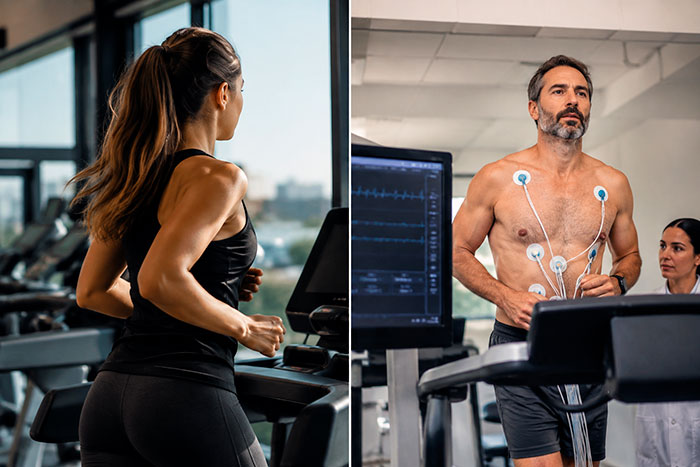
Returning to the Gym After Summer: Start Gradually
One of the most common mistakes is trying to return to the same weights, pace or intensity you were training at before the holidays from day one.
During exercise, oxygen demand increases and the cardiovascular system responds by increasing heart rate and the workload of the heart.
That is why, especially if you haven't trained for weeks or months, it is advisable to gradually increase the intensity of your exercise, respect recovery periods and pay attention to how your body responds.
Do You Need a Cardiovascular Check-Up Before Returning to the Gym?
Not everyone needs to undergo the same tests before exercising.
However, a cardiovascular check-up may be particularly advisable if:
- You haven't exercised for a long time.
- You are going to start high-intensity training.
- You have high blood pressure, high cholesterol, diabetes or other cardiovascular risk factors.
- You have a family history of cardiovascular disease or sudden cardiac death.
- You have previously had heart disease.
- You experience chest pain, dizziness, fainting, disproportionate shortness of breath or palpitations during exercise.
An assessment by a sports cardiology specialist can help determine your cardiovascular health and whether additional tests are necessary.
Warning Signs During Exercise
Tiredness is part of training, but there are certain symptoms that should not be considered normal.
Pay attention if you experience any of the following during exercise:
- Chest pain or pressure.
- Dizziness or feeling faint.
- Disproportionate shortness of breath.
- Intense or irregular palpitations.
- Loss of consciousness.
If these symptoms occur, it is advisable to stop exercising and seek medical assessment. If they are severe or suggest a medical emergency, immediate medical attention should be sought.
Sports Cardiology in Barcelona: Get Back to Training While Taking Care of Your Heart
September is a good time to get back into healthy habits and return to the gym, but also to pay attention to our cardiovascular health.
If you have risk factors, a relevant medical history or symptoms, or you are planning to start demanding training, a cardiovascular assessment can help you better understand the health of your heart.
At INSCOR Cardiology, we perform cardiovascular check-ups and sports cardiology assessments in Barcelona, tailoring each assessment to the individual's characteristics and goals.
Get back to training while taking care of your heart.
Book your cardiovascular check-up at INSCOR.
 EN
EN  ES
ES  CA
CA